Showing posts with label michael jordan. Show all posts

Wednesday, 19 September 2012

2. Flawed masculinity- Lebron James, Michael Jordan

Flawed masculinity is the second aspect of Shifman's typology regarding memes. The notion of flawed masculinity can refer to men's failure to contemporary masculine expectations in behaviour, appearance or performance. For instance, the overwhelming use of the "Bad Luck Brian" image to convey messages of failure and bad luck. Brian's image has been used as a core communicator to conversations regarding the daily lives of people, to debates about sports, politics and a host of various world issues. By society's expectations, Brian is considered a "geek", his red hair along with his freckled face and braces-laden teeth are considered to be representation of the traditional ideals of what is "uncool". If Brian did not appear the way he did, the memes simply would not be as successful and certainly would not be as humorous. 

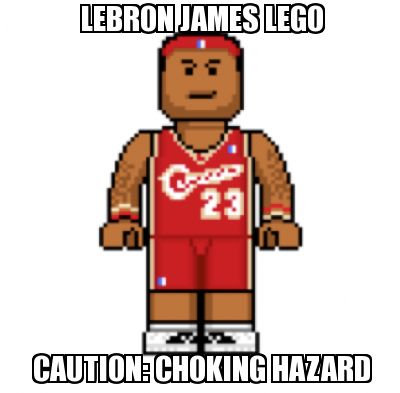
Similar trends also occur in basketball memes. For example, the consistent focus on Brian Scalabrine's perceived lack of talent has been prominent among the online basketball fan community. Such attention has effectively evolved Scalabrine's star image from a rarely-used bench player to that of a cult hero. However, perhaps the most telling example of such theme is within the memes concerning the sports biggest names. Memes concerning the Charlotte Bobcats mainly refer to the team's lack of success. The Bobcats also happen to be owned by basketball legend Michael Jordan. Perhaps the Bobcats' poor performances are justifiably criticised, it does make an arguable point that if Jordan was not the team owner, the Bobcats may not have been under as much scrutiny. Conversely, memes concerning superstar Lebron James tend to focus on his failures on the basketball court, such as his inability to hold his nerve during big match situations and his long-standing quest to win a NBA championship. If such memes targeted the other several hundred NBA players who have not won championships and are considerably lesser known compared to James, the memes simply would not work. 


Tuesday, 21 August 2012

Fidelity


As discussed in the preceding posts of this blog, Richard Dawkins (1976) theorised three characteristics of successful memes, all of which remain relevant today. Fidelity, fecundity, longevity refers to the meme's quality that enable easy imitation, replication and spreadability of the meme. Fragments of information that make sense or are meaningful to the reader are likely to become more successfully imitated or reproduced. In this sense, memes are successful because they are memorable (Blackmore 1998, p. 57). However, there is also an argument that they are important and useful as well, because of the increasing prominent use of memes as a communication method.

One important aspect of meme fidelity is susceptibility (Knobel 2006, 414). The notion of susceptibility refers to the timing or location of a meme, such as the meme's relevance to current affairs, its relation to already successful memes, as well as the interests and values of the space in which the meme is circulated. According to Knobel (2006), "ideal conditions" of susceptibility will allow particular memes to function more easily and maximize the possibilities for the meme to spread and go viral. Under ideal conditions, the "hooks" and "selection attractors" built into the design allows the meme a higher possibilities of success, without being hindered by community filters, audience confusion or other forms of cultural barriers.

For example, since Michael Jordan's retirement, contemporary mass media has consensually advertised, marketed and talked about him as being the greatest basketball player of all time. Certainly, his statistics and overall achievements in the sports reinforce this notion. These images firmly portray Jordan as an iconic hero, in highlight reels, graphic montages, magazine features and endorsement campaigns.

Since retiring as a player, Jordan has ventured into managerial roles within the NBA, first as the general manager of the Washington Wizards and more recently, as the owner of the Charlotte Bobcats. Both franchises have rarely experienced success under the management of Jordan, with the Bobcats accumulating the unenviable achievement of having the win/loss record in NBA history during the 2011-12 season.

Many fans begun to question Jordan's greatness and alternative memes began circulating throughout the meme and basketball fan communities of the internet. These memes challenge broadcasted versions of Jordan during his playing career, as well as his overall legacy. The memes mock his failures as a team administrator and frequently incorporates existing memes, in order to further the notion of familiarity. The memes spread rapidly via social networks and meme websites, hooking into the sarcastic tone of memetics and ongoing critiques of Jordan's (lack of) administrative skills, that begun originally emerged from within discussion forums and social media.


Official Jordan advertisements.


Memes


Thursday, 26 July 2012

Memes and viral videos


Like the meme community, the activities of online video-sharing communities like YouTube blur the distinction between producer and audience. Similar to quickmemes and knowyourmemes, YouTube use a rating system (like or dislike) to guide visitors towards popular videos. Culturally significant videos will also rise above others based on the number of views. Burgess (2008, 101) writes that internet memes in contemporary culture is a "faddish joke or practice" that becomes widely imitated and reproduced. When a video is spread, replicated and mutated "virally", its reproducibility seems to guide its cultural value. That is, a work’s reception has become a part of its reproducibility. In this understanding, like memes, viral videos online are spread and mutated via distribution networks in ways that media producers cannot control. Speaking on the cultural relevance of memes, Lolcat creator Ben Huh (2010) believes memes are "more relevant than most of what’s on television...just as the sitcom or the 30-minute news broadcast or the soap opera from radio were the hallmark of how a certain generation understood entertainment and culture". For instance, the "Hitler reacts" videos or "the Hitler meme", involves a dramatic scene from the 2004 film "Downfall" in which Hitler realises his imminent defeat during World War II and begins screaming at his subordinates. The film is in German and the videos are remixed so that instead of the fall of the Third Reich, Hitler is reacting angrily to matters like the weak real estate market or the vuvuzela controversy from the football World Cup. Individually, these videos has little influence but collectively, in their thousands and their millions of viewers, these videos signify the variety and versatility in how people express themselves in the digital world. 

Basketball videos are remixed with a similar approach, to convey personal opinions and ideas. For example, in recent years, there has been a popular trend for basketball fans to remix video clips from two particular Nike advertisements: "Rise" featuring Michael Jordan and "What Should I Do" featuring Lebron James. The original ads document Jordan and James' dedication to becoming elite athletes. Fan mash-ups of the advertisements have been reproduced to "Michael Jordan responds to Lebron" and "Kobe Bryant responds to Lebron James" which conveys the perception of Jordan and Bryant as superior athletes citing James's fragility under big match situations. Remixes have also included "Lebron James- What should I do" which is a spoof video of the ad, made by disgruntled Cleveland Cavaliers fans, the team James left to join the Miami Heat. The same ads have also been remixed with gameplay from video games such as NBA2K and Call of Duty, and comically parodied with other sports television personalities to athletes from the NFL and UFC. 

Like memes, the "How quickly they forget" videos maintain a core framework of the video title and the song "Serenata Immortale" as the theme. The videos compare the on-court accomplishments of Michael Jordan with contemporary stars such as Kobe Bryant and Lebron James. 

The dynamics of memes and viral videos can be understood as involving the spread of replicable ideas through the processes of creativity, among individuals and communities connected by social networks (Burgess 2008, 110). Much academic focus is directed at the boundaries between old and new mass-media and the more egalitarian tone that is taking shape online. The notion of advocating for certain beliefs that go against the commercial grain of media producers or converting one's misfortunes into hilarious entertainment for millions of viewers can be as equally important in revealing a truth about the emerging trends in a digital age where the producers and administrators alike do not have full control. In some cases, expressions conveyed through memes or viral videos extend beyond the pleasure of laughter but satirical, sarcastic, expression, intentional or otherwise also jolts the viewer to confront other questions like, "what am I looking at?", "what am I laughing at?" or "do I agree with this message?" According to Walker (2010) in his New York Times article concerning the cultural influence of memes, he writes "This is what egalitarian cultural production really looks like, this is what having unbounded spaces really entails, this is what anybody-can-be-famous means...the real point is that to pretend otherwise isn’t denying the Internet — it’s denying reality". 

Original ads

Fan remixes 


Thursday, 19 July 2012

Kobe Bryant- Black Mamba or Ball Hog?


The meme is an evolutionary replicator, defined as unit of information (a catchphrase, a concept, an expression of fashion, philosophy, culture, or politics) that is copied from person-to-person by imitation. W. J. T. Mitchell poses the question ‘What do pictures want?’, implying that pictures may have an independent life- drawing on the rhetorical argument that the life-like properties of pictures affect people in different ways. This argument is mirrored in the creation of internet memes whereby individual pictures can be used to generate a host of varying interpretations. Concurrently, popular consensus can be conveyed through various different pictures. Fan-created memes can be used to convey messages advocating socio-cultural and socio-political beliefs, stereotypes and personal interpretations; conversely they can also serve as "creative vandalism" to subvert the official's representations of whatever issues they choose. For instance, memes concerning Kobe Bryant predominately stereotypes him as a "ball hog" due to his playing style, which relies heavily on shooting the basketball rather then distributing it to other team mates. This goes against the ideals of team-play that has traditionally been associated with team sports like basketball. This perception also challenges Bryant's star image as a global superstar and as one of history's greatest basketball athletes, whose accomplishments arguably rivals that of all-time greats like Michael Jordan. Many fans also cite Jordan’s selfless nature as a key reason in his superiority over Bryant.