Showing posts with label textual production. Show all posts

Wednesday, 8 August 2012

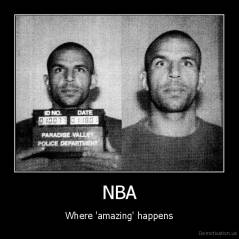
"Meme warfare" - Jason Kidd- All time great or All time drunk?


In his journal article regarding online activism, Dennis Allen (2003) talks about a "meme warfare" in which users, through memes attempt to counter commercial images and ideas. The "metameme" as described by Allen works to reposition the perception of the corporate world and sparks a larger critique of corporate culture. For instance, current affairs or events can incite the creation of an internet meme, which in turn forms conversation for those who access and share it. Movies or television shows for example, often invoke conversations between people and many of them are expressing themselves through memetic activity. Using the movie franchise Twilight as an example, the release of the movies has prompted a host of internet memes which predominately mocks everything that is associated with the films such as the storyline, characters and its fans. A popular template for Twilight memes features the caption "Still a better love then Twilight".


The meme mocks the storyline of the movies and at the same time promotes resistance against the commercial strategies of media producers.


Similar trends is also evident in the world of basketball in which fans are spawning memes in real-time fashion , prompted by match or player incidents. These affairs can vary from the most shocking to the most comical and often the messages conveyed through memes goes against a player's star image or the sport's commercial strategies. A prime example of this are memes concerning Kobe Bryant and Lebron James where much of the messages in the memes portray them as selfish individuals, rather then great players of the game, or memes regarding Brian Scalabrine that portray him as a great basketball talent, who in the real-world is a fringe player, at best.

Another example, New York Knicks point guard Jason Kidd was arrested on drink-driving charges after crashing his vehicle. Kidd, who is considered as one of the greatest players of the modern era, for his selfless style of play, is highly respected among the basketball community. Fans and pundits alike widely perceive him as a role model who upholds all the mythical ideologies associated with sports such as fair play and sportsmanship. Media exposure ensured that many basketball fans quickly became familiar with reports of Kidd's arrest. Kidd's image rapidly became a symbol for fans to mock. In short amount of time, there have been many variations of the meme, where people expressed their opinions about the incident. Whether or not the meme becomes successful is essentially secondary when it comes to measuring the cultural influence of memes. The immediacy of convergent media allow fans to circulate their thoughts as soon as stories are reported and their memetic expressions can spread rapidly via social networks, allowing consensus to be formed which are at times contradictory to the visions of media officials. For instance, the Jason Kidd memes posted in this blog has spread throughout the internet where it has the potential to challenge his heroic star image, which can lead to further ramifications such as tarnishing the commercial image of the player, the team, the league and possibly the sport in general.


Most likely, these Jason Kidd memes will remain within the spheres of basketball fan communities, but the significant point is that, fans were willing to invest their time and effort to craft memes about the incident, further demonstrating the cultural phenomenon of memes, as a creative and yet powerful way of expression.


Wednesday, 1 August 2012

Bitch Please!


The majority of memes are easily recognisable through its image or video and if one cannot instantly see the resemblance between the meme and its source text, then the meme will likely be less popular. For example, the Yao Ming face, also known as "Bitch Please", "Dumb Bitch" or "Fuck That Guy" is a rage comic-style drawing of former Houston Rockets star Yao Ming. The image is based on a photograph of Yao, from a press conference in May 2009. According to knowyourmemes.com, the comic drawing of the image first appeared on reddit.com in July 2010. The image has since been commonly used in meme templates and is typically used as a reaction face to depict sarcasm and the portrayal of a dismissive attitude towards a situation, input or opinion. Variations of the stock image include the "Fuck No Guy" which uses Yao's face, edited with a horrified expression.

This meme is particularly interesting because its source text, which is Yao's personality, he is considered to be shy, humble and sincere by most basketball fans. The meme's power relies precisely on the viewer's ability to register his personality traits to understand the sarcastic and satirical nature of the memes and to recognise the new environment into which Yao has been inserted and find humour in the incongruity of the situation.


Original source image:


Memes:


Friday, 27 July 2012

NBA- Where amazing happens


From 2007 - 2009 the NBA ran a series of advertisements featuring still images set to Carly Comando's song "Everyday" or Kanye West's "Amazing" with the catch phrase "Where Amazing Happens". Since then the ads have become popular with fans during the NBA season and on the internet with people parodying them. Earlier incarnations of this meme made fun of the league's crooked referees, ballooned salaries and player off-court discretions. While some memes are global, others are more culture specific, shaping collective actions and mindsets (Knobel and Lankshear, 2007). Later imitations of this meme including blending the theme to other sports, social activities (e.g video games) as well as showcasing what is amazing in one's own life, whether it is serious or comical.

Much like the popular "Hitler meme", where video clips of Hitler from the 2004 German film "Downfall" are used to spawn a wave of memes juxtaposing Hitler's rage with a stream of contemporary issues, the comic device for "Where Amazing Happens" is simple: new captions, images or footage are inserted with the image of the NBA logo and the phrase "Where Amazing Happens" or in the case of a video, the montage is set to the tune of "Everyday".

The series of "Where Amazing Happens" spoofs illustrates the fundamental attribute of contemporary popular culture, such as the representation system of simulacra and pastiche (Jameson 1991) in which core images such as a catch phrase, song, video clip or a photograph is replicated repeatedly. Additionally, the constant re-assembling of texts manifesting in new forms of expression, problem solving, circulation and affiliation by individuals reflect what Jenkins (2007) conceptualises as participatory culture. Fundamental to participatory culture is reworking content and sharing it in mash-ups, remixes, parodies among other actions of expression.

As mentioned in previous postings, the "most viewed" category on meme and video sharing sites is a key indicator of popularity of one's work. However, they also serve as key indicators to not only how many people viewed a meme or video but also how many individuals chose to do something with it (Burgess and Green 2009). This distinction is crucial as it epitomises the difference between the way mass media has traditionally been studied and how media can be evaluated in the digital environment where user participation is emphasised. For instance, the "Where Amazing Happens" memes originated back to a 2007 article written by Bill Simmons on espn.com in which he described a conversation with his friend about how to make a parody of the ad, Simmons shared his step-by-step ideas with his readers and since then his notes have been used as a template for parodies of the ad. These user created texts, whether it is a video or a graphic are simple in format and tend to lack the aesthetics of a professional production. Simmons' criteria is as follows-

"Where crooked referees happen."
"Where stealing money happens."
"Where paying spectators getting punched happens."
"Where a truck party happens."
Where white guys who think they're black happens."
"Where referees deciding a championship happens."
"Where quitting on your team happens."
"Where Amazing Happens."

In this sense, it may be argued that "amateur" texts translate into "good" memes (Shifman 2011). For instance, the "Where Amazing Happens" creations tend to have common features such as — focus on ordinary individuals, one's or someone else's personal shortcomings, humour, simplicity and repetitiveness. This is a distinct contrast and perhaps defiant to carefully crafted corporate content (Shifman 2011). This notion coincides with Jenkins (2009) argument that textual gaps enhance the "spreadability" of content. He argues that since the contemporary media environment heavily encourages user-involvement, the incompleteness and "amateurishness" of texts entices users into further dialogue such as fill in the gaps, address the creations or disagree with the creators, thus contributing to the spread of the meme.

Original videos

Parodies (Bill Simmons template)


Video titled "Bill Simmons Omissions" focusing on aspects of the game Simmons did not touch upon in his template.


Other fan parodies & imitations


Graphic memes


Thursday, 19 July 2012

Fan activism through memes- Jeremy Lin


Fan activism has long existed on the internet, with fans bounding together to save television shows from cancellation, defend themselves from copyright infringement threats by media corporations and promote alternative ideas (Jenkins 2012). In Jenkins' article regarding fan activism through the Harry Potter Alliance (HPA), he concluded, the fan group encourages people to speak out as fans on a broad range of socio-cultural and socio-political issues, through what the group's leader, calls "cultural acupuncture". The group's generative practices of deploying content from the fictional universe onto real-world concerns helps empower fans to become civically engaged and politically active. Fan activism is also evident in an online capacity with similarly profound effects. For example, 4Chan, originally a manga and anime fandom community generated memes and spread them across the Internet. Among the creations was the Obama 'Joker' imagery that was used in the Tea Party's campaign's against 'Obamacare'.

Jeremy Lin's performances on the basketball court during the 2011-2012 NBA season captured the imagination of fan's worldwide. Lin became the first ever American of Taiwanese of Chinese descent and the first Harvard graduate in nearly 50 years to play in the NBA, and, unexpectedly led his team; the New York Knicks to a winning streak, helping them make the playoffs. His on-court success generated the global following known as 'Linsanity', where fans attach his surname to coin popular catchphrases such as 'Lincredible' instead of incredible, 'Linning' instead of winning, "Super Lintendo" instead of Super Nintendo, 'Linvestment' instead of investment. The internet derived term, 'Linsanity' has also translated into marketing success for Lin with brands such as Nike, New Era, Adidas, Ben & Jerry's and Volvo using the phrase to promote their products.