Showing posts with label bad luck brian. Show all posts

Wednesday, 19 September 2012

2. Flawed masculinity- Lebron James, Michael Jordan

Flawed masculinity is the second aspect of Shifman's typology regarding memes. The notion of flawed masculinity can refer to men's failure to contemporary masculine expectations in behaviour, appearance or performance. For instance, the overwhelming use of the "Bad Luck Brian" image to convey messages of failure and bad luck. Brian's image has been used as a core communicator to conversations regarding the daily lives of people, to debates about sports, politics and a host of various world issues. By society's expectations, Brian is considered a "geek", his red hair along with his freckled face and braces-laden teeth are considered to be representation of the traditional ideals of what is "uncool". If Brian did not appear the way he did, the memes simply would not be as successful and certainly would not be as humorous. 

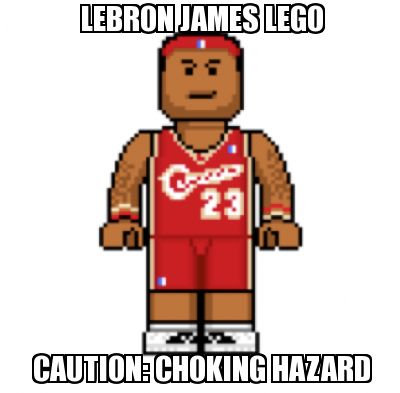
Similar trends also occur in basketball memes. For example, the consistent focus on Brian Scalabrine's perceived lack of talent has been prominent among the online basketball fan community. Such attention has effectively evolved Scalabrine's star image from a rarely-used bench player to that of a cult hero. However, perhaps the most telling example of such theme is within the memes concerning the sports biggest names. Memes concerning the Charlotte Bobcats mainly refer to the team's lack of success. The Bobcats also happen to be owned by basketball legend Michael Jordan. Perhaps the Bobcats' poor performances are justifiably criticised, it does make an arguable point that if Jordan was not the team owner, the Bobcats may not have been under as much scrutiny. Conversely, memes concerning superstar Lebron James tend to focus on his failures on the basketball court, such as his inability to hold his nerve during big match situations and his long-standing quest to win a NBA championship. If such memes targeted the other several hundred NBA players who have not won championships and are considerably lesser known compared to James, the memes simply would not work. 


Wednesday, 12 September 2012

NBA2K Memes


From its roots on 4chan and its original membership premise of doing it for the "lolz", this internet phenomenon known as memes has evolved into a conventional form of communication for net-users. That is, no longer are memes simply a avenue for humour, but it has also become a form of communication allowing people to connect. In that sense, meme communities can also be regarded as collective intelligence (Lévy 1997) in practice. Lévy’s work contextualises the concept of collective intelligence through knowledge societies. Collective intelligence is shared knowledge which emanate from collaborations and contributions from many individuals. Contemporary meme communities like NBA Memes or NBA humour are knowledge communities which circulate data contributed by basketball fans. The collective contribution of memes enables all members of a community to have access to knowledge because as Lévy (1997, 20) states, “within a knowledge community, no one knows everything, everyone knows something, all knowledge resides in humanity.” Consequently, this collective effort among members allows the internet-based social community to become more personal and authentic in which friendships are formed and norms within the community are, as Howard Rheingold (2000) says, “established, challenged, changed, re-established and rechallenged, in a kind of speeded-up social evolution".

The meme community NBA 2K memes, is a fitting example of Lévy and Rheingold's ideas. On the "about" section of its Facebook page, it encourages users to create memes based on their NBA 2K game play experiences, thus ensuring the longevity of the community via collaborative sharing by individuals bounded by common interests. For the most part, the memes typically take on a humoristic tone by incorporating fecund themes from both basketball and the overall meme culture, such as incorporating the image of "Bad Luck Brian" to convey messages of misfortune or failure, displeasure over Brian Scalabrine's low player ratings within the game, Lebron James's inability to hold his nerve in tight contests, or Kobe Bryant's over willingness to shoot the basketball.


Wednesday, 29 August 2012

JaVale McGee

Denver Nuggets player JaVale McGee is considered by basketball experts as one of the game's bright young stars. However, in recent years, as a result of his eccentric playing style which has led to a host of ill-advised decisions during games, he has developed an unenviable reputation among fans as a careless player. Some of McGee's ill-advised plays have consisted of: attempting flashy dunks during crucial games, attempting difficult shots in order to improve his own game statistics and manoeuvring himself for a defensive play while the rest of his team is in an offensive transition on the other end of the basketball court. Video clips of such bizarre plays have made its way onto YouTube and have become a popular source for comedic montages. Likewise, McGee has also become the target of fan mocking through memes in which his image has become a stereotypical signifier of the "foolish" or "failure" identity.


Wednesday, 25 July 2012

Digital reproducibility and evolution


The current internet meme trend, hosted predominantly by websites such as quickmeme and knowyourmeme and whatdoumeme provides a typical example of how mass reproduction functions in the virtual environment. Typically, an individual meme consists of a recycled image accompanied by a comic caption. These images may feature well-known cultural figures like Willy Wonka from Charlie and the Chocolate Factory, Philip J. Fry from Futurama, Ned Stark from Game of Thrones or The Most Interesting Man in the World from Dos Equis beer advertisements. The images may also represent newly invented characters such as the socially awkward penguin, the paranoid parrot, scum bag Steve or bad luck Brian, to name a few. Memes can be reproduced by any member of the public according to the prescribed theme, for instance memes using The Most Interesting Man's image features the trademark phrase structure, "I don't always....but when I do...."). Since the captions are created anonymously by the viewing public, the line between producer and audience becomes non-existent. Memes evolves like a life form with captions behaving like genetic traits, spreading to influence individual thought processes (Dawkins 1976). Internet memes thus are ideas or concepts spreading and evolving over the internet, by chance, through commentary, forwarding, search, or other communicative means online (Wagner and Jiang 2012, 185). Without the momentum gained by sharing, a meme has little cultural relevance. On websites like quickmeme and knowyourmeme, users are guided towards the most popular memes, thus they are more likely to be reproduced and shared on Facebook streams, Twitter feeds and other social media websites. And when a meme explodes into popularity,  its reproducibility appear to guide its cultural value, thus a work’s reception has become a part of its reproducibility. As a result, consensus are often formed which at times contradict against the commercial imperatives of administrators and producers alike. For instance, as exhibited in a previous post of this blog, many fans through memes, conveyed their views of Kobe Byrant as a selfish player, often disregarding his achievements in the sport, therefore forming a consensual view which contradicts against his official star image. Another example is the cult-like following Brian Scalabrine has attracted as a result of fan generated memes. Despite his perceived lack of basketball skills and playing time on the court, Scalabrine has become the inspiration of meme creations showing support for him that has transcended into positive fan responses during his basketball games. 

What makes memes generative is how the activity of meme creation has been adopted by various participatory cultures. Popular cultural mages or phrases are used by fans to create extended discussions concerning a variety of cultural topics. A meme template featuring a stock image can be used as a crossover to convey messages regarding other cultures and vice versa. This notion was shown in previous posts regarding NBA commissioner David Stern http://memesnba23.blogspot.com.au/2012/07/fan-displeasure-through-memes.html and socio-cultural issues being expressed through memes featuring basketball stars http://memesnba23.blogspot.com.au/2012/07/socio-cultural-issues-through-memes.html . The memes below show how singular images are used to generate a host of discussion topics, many of which are paradoxical to the image's origin industry (e.g. using images from movies or television programs to generate conversations about politics and sports...etc.)