Showing posts with label brian scalabrine. Show all posts

Tuesday, 2 October 2012

3. Humour

Humour is the third element in Shifman's typology to analysing memes. She asserts that humour can provide unique insight into culture and believes it is a central element for successful memes. For the most part, humour is universal and can be observed within a vast host of societies and understood by individuals from many cultural backgrounds. Lankshear and Knobel break down the distinct patterns within memes that are considered to be key contributors to their fecundity. The prevalent theme is that there is always an element of humour, ranging from quirky parodies to the outright disgusting, through to the acerbically ironic. The element of humour is conveyed through intertexuality such as cross-references to different everyday or popular cultural events, icons or phenomena, or creative juxtapositions of images, video clips or music lyrics.

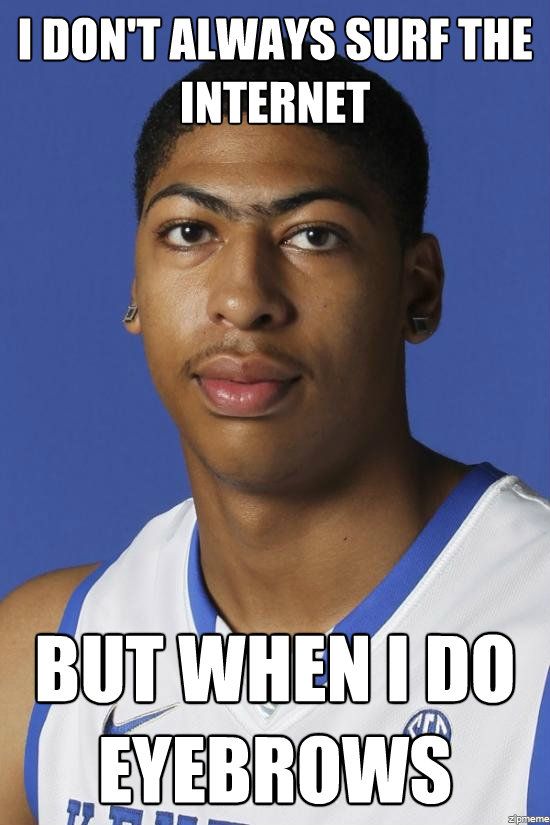
These ideas can also be applied to analysing basketball memes. The predominant structure of basketball memes is to attempt to share one's feelings through humour. As noted by Lankshear and Knobel, there can be various notions of humour, from sarcastic wit, to the outrageously bizarre or harmful personal attacks. In terms of basketball memes, these can from Brian Scalabrine's lack of playing time, Lebron James's receding hairline, Anthony Davis's uni-brow, Chris Bosh's facial features, the perceived compromising of fair play due to crooked referring or administrative decisions, and so on. 


Thursday, 13 September 2012

1. For ordinary people- Brian Scalabrine


Limor Shifman describes memes as "conceptual troublemakers". She alludes to the notion regarding the wide academic debate over the theoretical usefulness of memes ever since Dawkins coined the term in 1976. Memes have evolved into a prominent mode of communication for net users, as uncontested normalities within daily routines. Shifman suggests that memes can be a powerful concept in revealing different aspects of digital culture, such as the influences of "viral" and "memetic" works.

Shifman argues that while the terms "viral" and "memetic" are often used interchangeably- distinguishing them may lead to more enhanced understanding of networked digital culture. That is not to say they are different but rather, instead Shifman suggests treating them as "interconnected video-types". A viral video is a clip that spreads to the masses through digital networks via "word-of-mouth" mechanisms such as sharing and reposting on social media, with the core video remaining without significant changes. In contrast, memetic videos involve a different kind of participation. Memetic videos are inspired by popular clips or clips that garner attention which invokes creative user engagement in the form of parody, remixing or mash-ups. The Hitler downfall parodies, or more recently, Justin Bieber's "boyfriend" music video are particularly well known memetic videos. Off course, many memetic videos begun as viral videos, and many become viral as a result of wide spread reproducing. 

According to Shifman, both viral and memetic videos seem to coincide with what Henry Jenkins refers to as "spreadable media", yet the distinction between them illuminates the two different elements of participatory culture. Viral relates to the diffusion and spread of media, while memetic relates to the prevalent mode of meme-based communication. Academic insight thus far has predominately focused on "viral" videos, while studies into memes have been less prevalent. Studies into meme culture may benefit our understanding of contemporary digital culture. 

Shifman's analysis of memetic videos contextualised six common features:

1. focus on ordinary people
2. flawed masculinity
3. humour
4. simplicity 
5. repetitiveness
6. whimsical content. 

Furthermore Shifman suggests that these attributes make the video as "incomplete or flawed", therefore invoking further creative dialogue. That is, "bad" amateur created content in fact make "good" memes in contemporary participatory culture. Using Shifman's typology, basketball memes of the graphical kind also exhibit similar features. 

1. Focus on ordinary people.

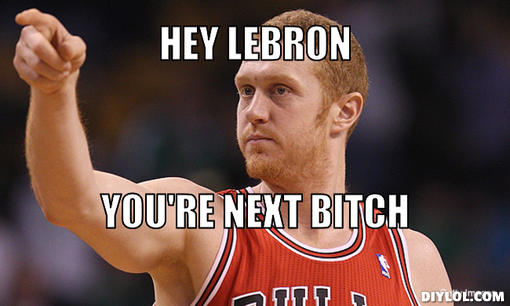
The Brian Scalabrine memes focuses on NBA veteran Brian Scalabrine's basketball achievements and talents (or lack thereof). Scalabrine, a career bench player is ordinary compared to the superstars of the game such as Lebron James, who has won numerous accolades and has been in the pinnacle of the sport throughout his career.  Basketball memes focuses on Scalabrine's ordinary attributes and convey them in a manner that mockingly perceives him to be one of the sport's legends. The theme structure of these memes all interchangeably refer to his lack of playing time and the apparent "shock" when he scores or makes an impressive play. Scalabrine's ordinariness essentially invokes creativity among basketball fans.


Wednesday, 12 September 2012

NBA2K Memes


From its roots on 4chan and its original membership premise of doing it for the "lolz", this internet phenomenon known as memes has evolved into a conventional form of communication for net-users. That is, no longer are memes simply a avenue for humour, but it has also become a form of communication allowing people to connect. In that sense, meme communities can also be regarded as collective intelligence (Lévy 1997) in practice. Lévy’s work contextualises the concept of collective intelligence through knowledge societies. Collective intelligence is shared knowledge which emanate from collaborations and contributions from many individuals. Contemporary meme communities like NBA Memes or NBA humour are knowledge communities which circulate data contributed by basketball fans. The collective contribution of memes enables all members of a community to have access to knowledge because as Lévy (1997, 20) states, “within a knowledge community, no one knows everything, everyone knows something, all knowledge resides in humanity.” Consequently, this collective effort among members allows the internet-based social community to become more personal and authentic in which friendships are formed and norms within the community are, as Howard Rheingold (2000) says, “established, challenged, changed, re-established and rechallenged, in a kind of speeded-up social evolution".

The meme community NBA 2K memes, is a fitting example of Lévy and Rheingold's ideas. On the "about" section of its Facebook page, it encourages users to create memes based on their NBA 2K game play experiences, thus ensuring the longevity of the community via collaborative sharing by individuals bounded by common interests. For the most part, the memes typically take on a humoristic tone by incorporating fecund themes from both basketball and the overall meme culture, such as incorporating the image of "Bad Luck Brian" to convey messages of misfortune or failure, displeasure over Brian Scalabrine's low player ratings within the game, Lebron James's inability to hold his nerve in tight contests, or Kobe Bryant's over willingness to shoot the basketball.


Monday, 10 September 2012

White Mamba has retired

After failing to gain interest from any NBA teams this off-season, Brian Scalabrine has announced his retirement from professional basketball and has accepted a position as a colour commentator for Boston Celtics games next season. The news of Scalabrine's retirement sent the online NBA meme community into a tailspin with tributes flooding in from fans. Meme communities such as NBA Humor and NBA Laughters marked the day of tribute as the "Scalabrine meme palooza". The search has already begun of who community members think is the next "best" player in the NBA, so it will be interesting whether if Scalabrine memes will continue to flourish or fade out like many have already previously. But for now, tribute memes devoted to Scalabrine have begun circulating en masse.