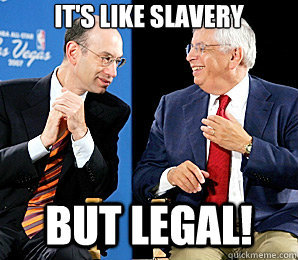
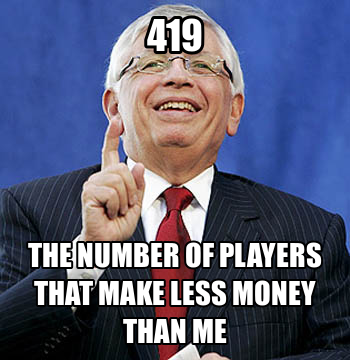
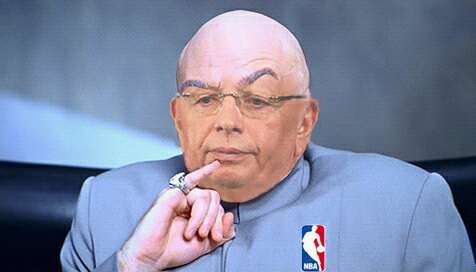
National Basketball Association (NBA) fans has often blamed executive decisions made by league commissioner David Stern, as the main catalyst for compromising the ideals of competition and fair play in the NBA. Such accusations include, draft rigging to suit teams with larger television markets, allowing player transactions to favour major city teams and refusing to compromise during negotiations talks by the players union for an increased salary, ultimately leading to the 2011 - 2012 NBA season lockout, cutting the season short by 16 games. More recently, Stern was accused of vetoing the trade of marquee of players and rigging the 2012 NBA draft to allow New Orleans Hornets to draw the top pick (the Hornets are owned by the NBA). Certainly, the proposition of fan displeasure towards Stern is supported by substantial levels of fan complaints regarding his decisions, across the various forms of fan generativity on the internet. Fan concerns are voiced out within message forums and more recently are expressed through memes. As proposed in a case study concerning football fans, written by David Rowe, Andy Ruddock and Brett Hutchins (2010) — they suggest that, a common and pleasurable way for fans to deal with what they perceive as 'unfavourable' basketball incidents is to complain. Complaints can take many forms. Perhaps the most familiar is to express discontent at the state of the sport due to the primacy of money and the power of media broadcasters and so on. Rowe, Ruddock and Hutchins (2010) also argue that complaints can be interpreted as a form of fan enthusiasm in the sense that, complaints actually exhibit fans' devotion to the sport, so much so, they are willing to invest their time and effort to express their feelings and build consensus among other fans, as to what they are unhappy about and crucially what they are willing to do about the situation. Using the observations from Rowe, Ruddock and Hutchins’ case study about football fans, there appear to be similarities in the way basketball fans embrace networked media for comment and activism. The memes below exhibit a degree of fan resistance towards the commercial imperatives of the NBA through memes, some of which are attempts of humour through sarcasm while others take on a more serious tone with personal attacks directed at NBA commissioner David Stern. Together, these memes comprise a consensual tone of basketball fans in that they see Stern's ambitions for increased revenue and television ratings as the major contributor to what they perceive as problems concerning the NBA.
Additionally, fans have also associated their displeasure with Stern, with cultural and political issues within society such as healthcare reforms in the United States, the world's aids epidemic and political tensions in the middle east.







.jpg)


.png)
.png)
.png)


